
Buy Discounted Roblox Gift Card Here
It’s not just a game. It’s a digital nation with its own GDP, fashion industry, and real estate market.
If you ask a 40-year-old what Roblox is, they might vaguely describe "digital Lego" or a distraction for their kids on an iPad. If you ask a 12-year-old, they won't describe a game at all. They will describe a place where they work at a pizza parlor, run a fashion empire, flee from a pig-monster, or simply hang out on a floating island.
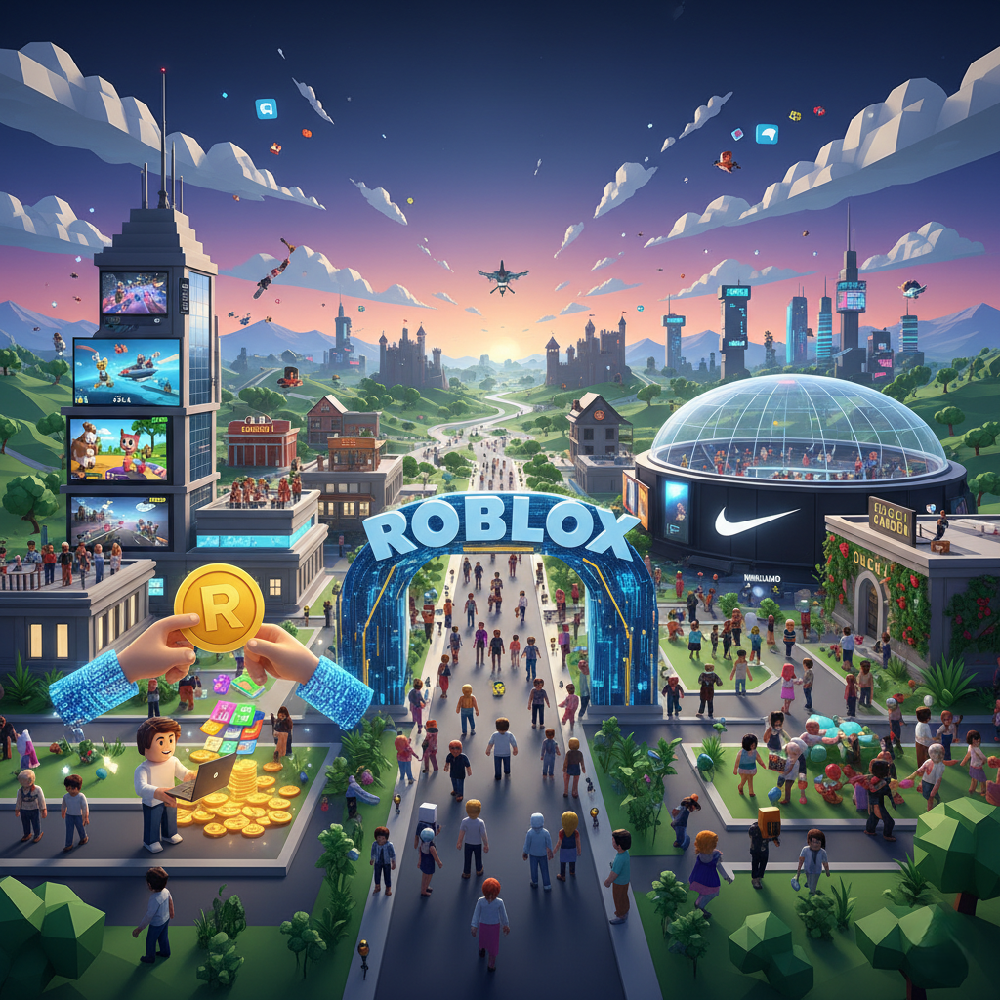
With over 70 million daily active users, Roblox has quietly achieved what tech giants like Meta (Facebook) have spent billions trying to force into existence: a functioning, thriving Metaverse.
Here is how a clunky, blocky sandbox became the most important digital playground of a generation.
1. The "YouTube for Games" Model
The biggest misconception about Roblox is that it is a "game." It isn't. It is an engine.
Think of Roblox like YouTube. YouTube doesn’t make videos; it provides the tools for creators to upload content and the servers for people to watch it. Similarly, Roblox provides a developing tool called Roblox Studio (based on the coding language Luau) and lets users build whatever they want.
-
The Variety: This leads to infinite variety. One minute you are playing Phantom Forces (a high-end shooter), and the next you are in Adopt Me! (a pet simulation game that often has more concurrent players than most AAA titles on Steam).
-
The Developers: The people making these games aren't typically 40-year-old professionals in cubicles. They are often teenagers coding in their bedrooms, learning game design, monetization, and community management in real-time.
2. The "Robux" Economy: Where Kids become CEOs
The engine that powers Roblox isn't just code; it's capital. The platform operates on a currency called Robux.
While users buy Robux with real money to purchase outfits or in-game perks, the real magic happens with the Developer Exchange (DevEx).
The Flywheel:
A developer creates a popular game or digital clothing item.
Players spend Robux on that item.
Roblox takes a cut, and the developer keeps a portion.
Once the developer earns enough, they can exchange those Robux back into real-world fiat currency (USD, etc.).
This has created a class of teenage millionaires. Top developers are not just coding; they are hiring teams of texture artists, sound designers, and community managers. They are running fully functional businesses before they graduate high school.
3. The New "Mall Food Court"
For Generation Alpha, Roblox is the "third place"—a social environment separate from home and school.
In the 1990s, teenagers went to the mall to walk around, look at clothes, and talk. Today, they log into Brookhaven RP. They customize their avatars (which is a massive industry in itself—digital fashion is booming) and just... hang out.
The "gameplay" is often secondary to the social interaction. It is a physics-simulated chat room where your identity is defined by your digital avatar rather than your physical appearance.
4. When Gucci and Nike Entered the Chat
Corporate America has realized that traditional advertising doesn't work on a generation that lives inside a game engine.
-
Gucci Garden: A temporary event where a digital Gucci bag sold for more Robux than the actual physical bag cost in real life.
-
Nikeland: A persistent space where users can play sports and dress their avatars in Air Force 1s.
-
Chipotle: Launched a burrito maze where players could earn codes for free real-world food.
Roblox has become the new frontier for brand relevancy. If you want to reach the next generation of consumers, you don't buy a TV spot; you build a world.
5. The Dark Side of the Polygon
Of course, a platform populated by millions of minors with an open chat system comes with significant risks. Roblox has faced scrutiny over:
-
"Condo" Games: Spaces created explicitly for inappropriate behavior (which Roblox moderators fight a constant game of whack-a-mole to delete).
-
The Casino Effect: Concerns that loot boxes and trading mechanics condition children toward gambling habits.
-
Labor Issues: The debate over whether the platform relies on the unpaid or underpaid labor of young aspiring developers.
The Verdict
Roblox is occasionally controversial. But it is also the most potent creative engine available to young people today. It has democratized game development, allowing a 12-year-old in Malaysia to build a game played by a 12-year-old in Canada.
While the rest of the tech world argues about what the future of the internet looks like, the kids on Roblox are already living in it.
